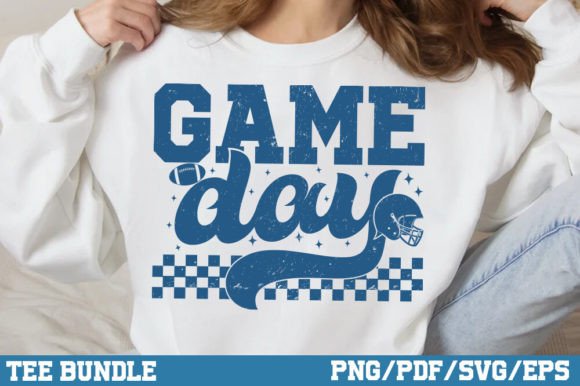
Football Season Embroidery Review
As a designer who spends more time looking at stitch density and thread tension than watching the actual game, I approach every new digital asset with a healthy dose of skepticism. We are all drowning in generic sports graphics, so finding a machine embroidery design that actually translates well from screen to fabric is rare. I recently put Football Season, Vintage Game Day Shirt through its paces to see if it holds up in real-world application. This isn’t just about whether it looks good on a monitor; it is about whether it survives the hoop, the needle, and the washing machine.
The first thing you notice when opening the package for Football Season, Vintage Game Day Shirt is the mood. It leans heavily into nostalgia. The "vintage" descriptor in the title is doing heavy lifting here, suggesting a retro aesthetic that feels worn-in rather than brand-new. For my testing scenario, I chose to use this design for a custom embroidered tote bag intended as a gift for a friend who runs a small local bakery but is also a die-hard football fan. The goal was to create a handmade product that felt personal, slightly rugged, and visually interesting without being overly loud. The layout of the design naturally lends itself to a centered chest placement or a large pocket print, which immediately signaled to me that this would work beautifully for apparel and accessories alike.
Visual Personality and Design Anatomy
When evaluating any embroidery file, I start by analyzing the visual hierarchy. Does the design have a clear focal point? In the case of Football Season, Vintage Game Day Shirt, the typography usually takes center stage, supported by graphical elements that frame the text. The vintage style typically implies distressed textures or classic serif/slab-serif fonts, which can be tricky in embroidery. Sharp, thin lines often get lost in the fabric weave, while bold shapes read clearly. From what I observed in the preview files, the design avoids overly intricate filigree, opting instead for strong shapes that translate well into satin stitch and fill stitch applications.
This simplicity is a strength. A cluttered design forces the embroiderer to make compromises—either reducing the size, which loses detail, or increasing the density, which creates a stiff, uncomfortable garment. The clean lines of this graphic suggest it will lay flat and look professional on a variety of substrates. It has the kind of visual personality that fits perfectly into a craft business inventory because it appeals to a broad audience: parents buying for their kids, fans buying for themselves, and people looking for personalized gift ideas for holidays or birthdays.
Real-World Application: The Tote Bag Test
I decided to test the versatility of Football Season, Vintage Game Day Shirt by applying it to a canvas tote bag. Canvas is a forgiving fabric, but it can distort if the stitch density is too high. If the design relies on dense fill stitch areas, the fabric might pucker. However, given the vintage aesthetic, I suspected the design used more open spaces or lighter stitching, which would allow the natural texture of the canvas to show through. This interaction between fabric texture and thread is crucial for high-end custom apparel and accessory design.
The result was promising. The contrast between the thread colors and the neutral canvas created a striking image. The design didn’t feel like a sticker pasted on top; it felt integrated. This is exactly what an Etsy seller or small shop owner wants to achieve. Customers can tell the difference between a mass-produced transfer and a genuine embroidered patch or direct-to-garment stitch job. The tactile quality adds perceived value. When I held the finished tote, it felt substantial. It wasn’t just a bag; it was a statement piece. This level of quality is essential for building customer trust and encouraging repeat purchases in the digital product and handmade goods market.
Where to Use It (And Where to Pause)
While this design is versatile, it is not a universal fit. There are specific scenarios where Football Season, Vintage Game Day Shirt might struggle. First, consider small hoop sizes. If the original vector art contains fine details or tiny lettering that gets scaled down significantly, those elements may disappear entirely after stitching. Always inspect the smallest details before committing to production. If the text becomes unreadable, the design fails its primary purpose.
Second, avoid using this on highly textured or stretchy fabrics unless you are experienced with stabilizers. Materials like terry cloth, thick fleece, or jersey knits can distort the hoop size alignment, leading to misregistration. Similarly, dark fabrics require careful thread color selection. A vintage design often uses muted tones that might lack sufficient contrast against a black background. I recommend testing a monochrome version first to ensure the shapes remain distinct.
Additionally, be cautious with curved surfaces like baseball caps. While possible, achieving a smooth finish on a curved brim requires precise stabilizer usage and possibly digitizing adjustments. For beginners, flat items like tote bags, aprons, pillow covers, and tea towels are much safer bets. These products provide a stable surface that showcases the running stitch and satin stitch details without the risk of distortion.
Technical Considerations for Digital Sellers
For those of us selling design assets or finished goods, the file formats included in Football Season, Vintage Game Day Shirt are a significant advantage. Having both editable vector files (EPS/SVG) and raster files (PNG/PDF) allows for flexibility. You can resize the design for different products—from a tiny logo on a hat to a large graphic on a sweatshirt—without losing quality. This adaptability is key for a commercial embroidery workflow.
However, always verify the stitch count and file compatibility with your specific software. While the package includes neatly arranged files, it is prudent to check the recommended hoop size and stitch types within the embroidery software before running a full production batch. Testing on scrap fabric is non-negotiable. This step helps you identify potential issues with thread tension, color blending, or density mapping before you ruin a expensive garment.
The inclusion of multiple formats also supports the creation of printable mockups. As a creative entrepreneur, you know that presentation sells. Being able to quickly generate realistic previews of Football Season, Vintage Game Day Shirt on various garments helps you market your Etsy listings more effectively. It allows you to demonstrate how the design looks in different contexts, such as a baby embroidery project or a holiday embroidery gift set.
Final Verdict
Football Season, Vintage Game Day Shirt is a solid addition to any designer’s library. It captures a popular theme with a timeless aesthetic that transcends fleeting trends. Its strength lies in its clarity and adaptability. It works well for apparel decorators looking to add seasonal stock, for makers creating unique gifts, and for graphic designers expanding into the physical product space.
It is not perfect for every single project—avoid it for ultra-fine details or unstable fabrics—but when matched with the right material and technique, it produces a professional, appealing finished product. Whether you are making a sweatshirt embroidery for a client or adding a touch of spirit to a kitchen towel, this design delivers. It respects the medium of embroidery while offering enough visual interest to stand out in a crowded marketplace. For anyone looking to enhance their craft business offerings with reliable, high-quality T-Shirt Designs and Graphics, this is a worthy investment.